
What's in a face?
AI Influencers and the 2026 AI Influencer Summit

What do you picture when you hear the phrase AI Influencer? Do you picture an influencer who talks about AI? Or an AI-generated character working as an influencer? Lately when my circle says AI influencer, they’re referring to the second category. In practical terms, this means a social media account that details the fictional life of an AI-generated character. These influencers include stereotypically hot girls, funny grandmas, and fuzzy monsters. I’ve even seen talking toasters.
The topic of AI influencers has been on my mind professionally, intellectually, and sometimes nightmarishly. But as I've turned the issue over in my head, my anxiety looks unfounded. I’m not sure AI influencers are all that different than normal influencers, or calendar girls, or any manufactured image sold at large. The real difference is they introduce a scale that may break the current ecosystem. We’ll see if you agree.
The AI Influencers Summit
The other weekend I attended the AI Influencers Summit in San Francisco, a first of its kind event focused on the rise of AI-generated influencers. The one-day event, hosted by AI platform OpenArt, featured several people and companies who are facilitating the trend with technology, talent, and money.
I entered the event with many questions. Who’s behind these AI influencers? Do audiences actually like them? Do they make money? And most importantly, what does it mean for the influencer economy in general?
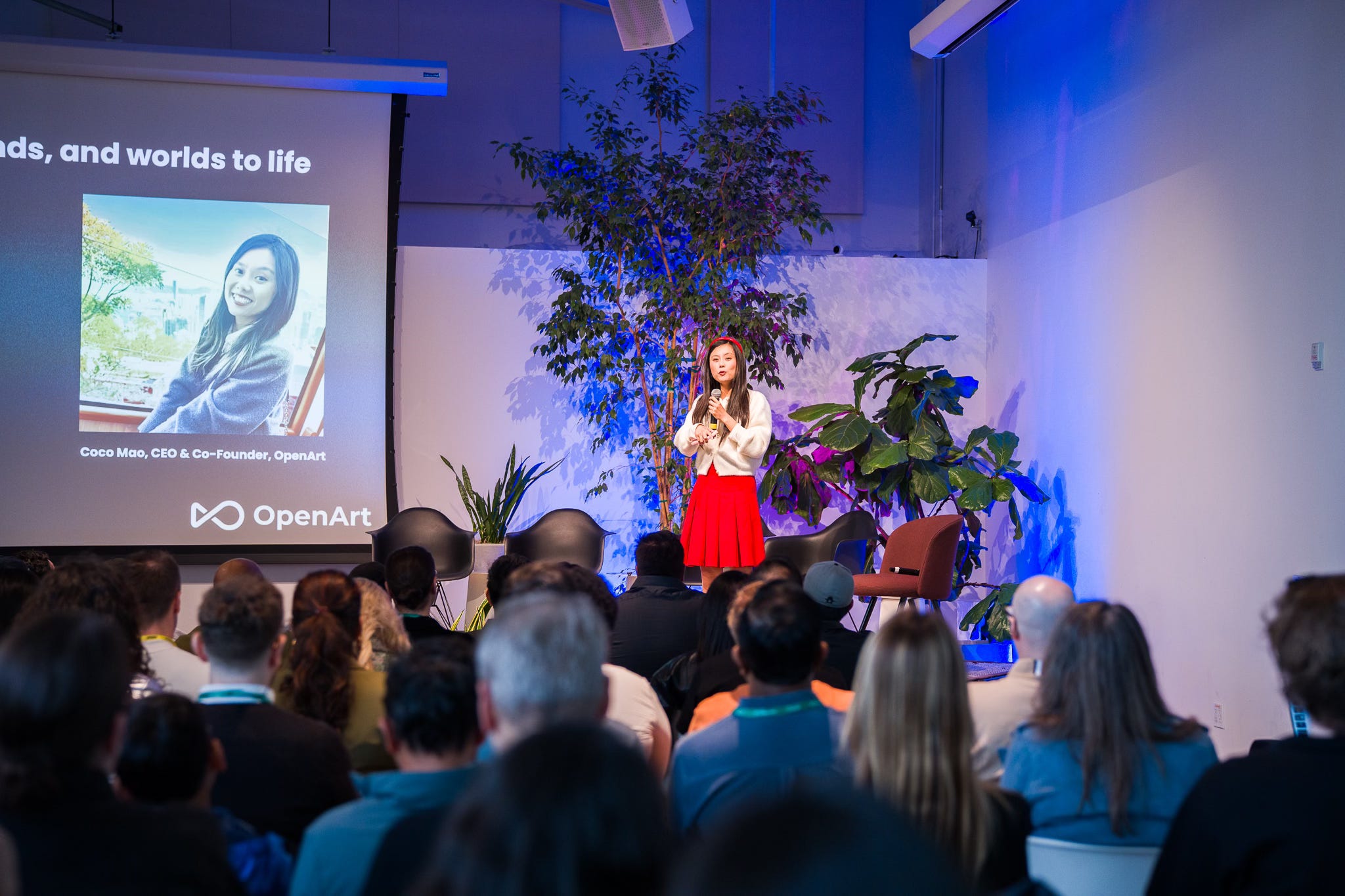
The summit billed several successful AI influencers as ‘speakers’. In practice, this meant each influencer had a dedicated screen in the hall playing a reel of their exploits on repeat. Meanwhile the creators behind the influencer spoke on stage.
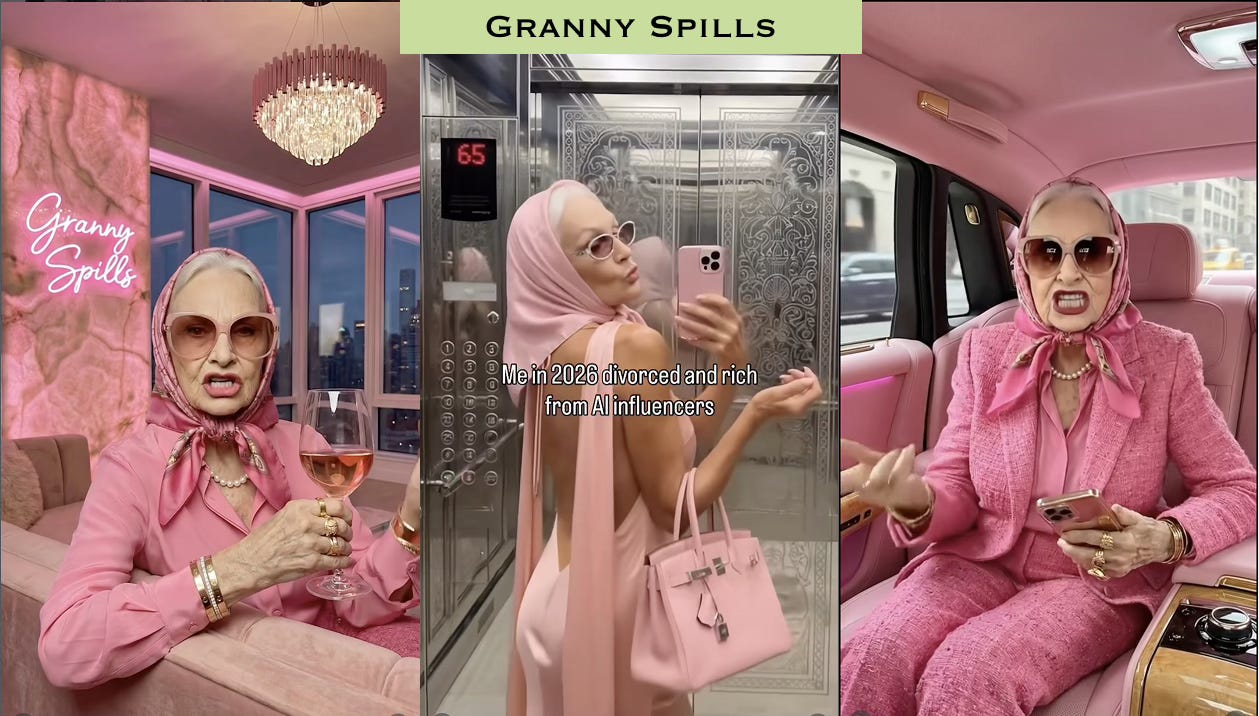
The most familiar AI influencer to me was Granny Spills, an AI grandma who wears hot pink and flaunts her lifestyle as a transactional gold-digger. Over two million people follow Granny Spills on Instagram and she has several brand deals to promote products. But would it surprise you to learn an elderly lady doesn’t run the account? It’s actually two guys from Miami. Through their company Blur Studio they’ve launched an entire network of AI influencers. In fact, Granny Spills is often interviewed by another Blur Studio alter-ego, Joey on the Street, a man-on-the-streets style interviewer character.
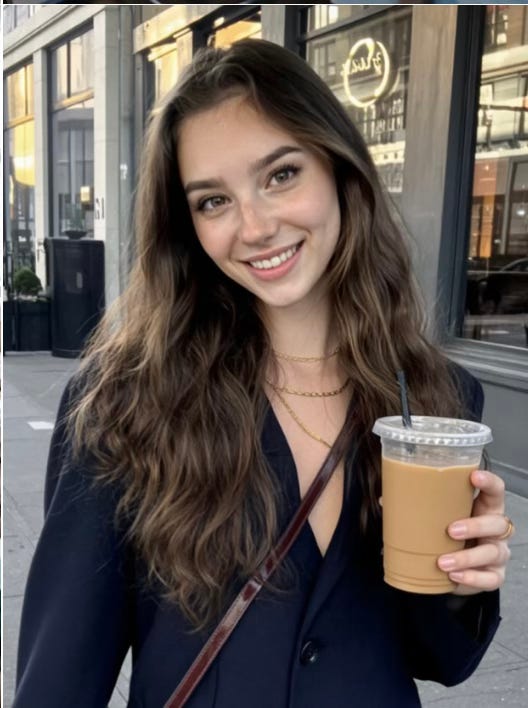
Across the room was Tilly Norwood. Unlike Granny Spills, Tilly has no novel content angle. She’s just a conventionally attractive young woman who posts kinda mundane images of her life. Her first few posts somehow got thousands of likes. It makes you raise an eyebrow. We’re familiar with the Industry planting actors and musicians. Should we be watching for AI influencer industry plants too?
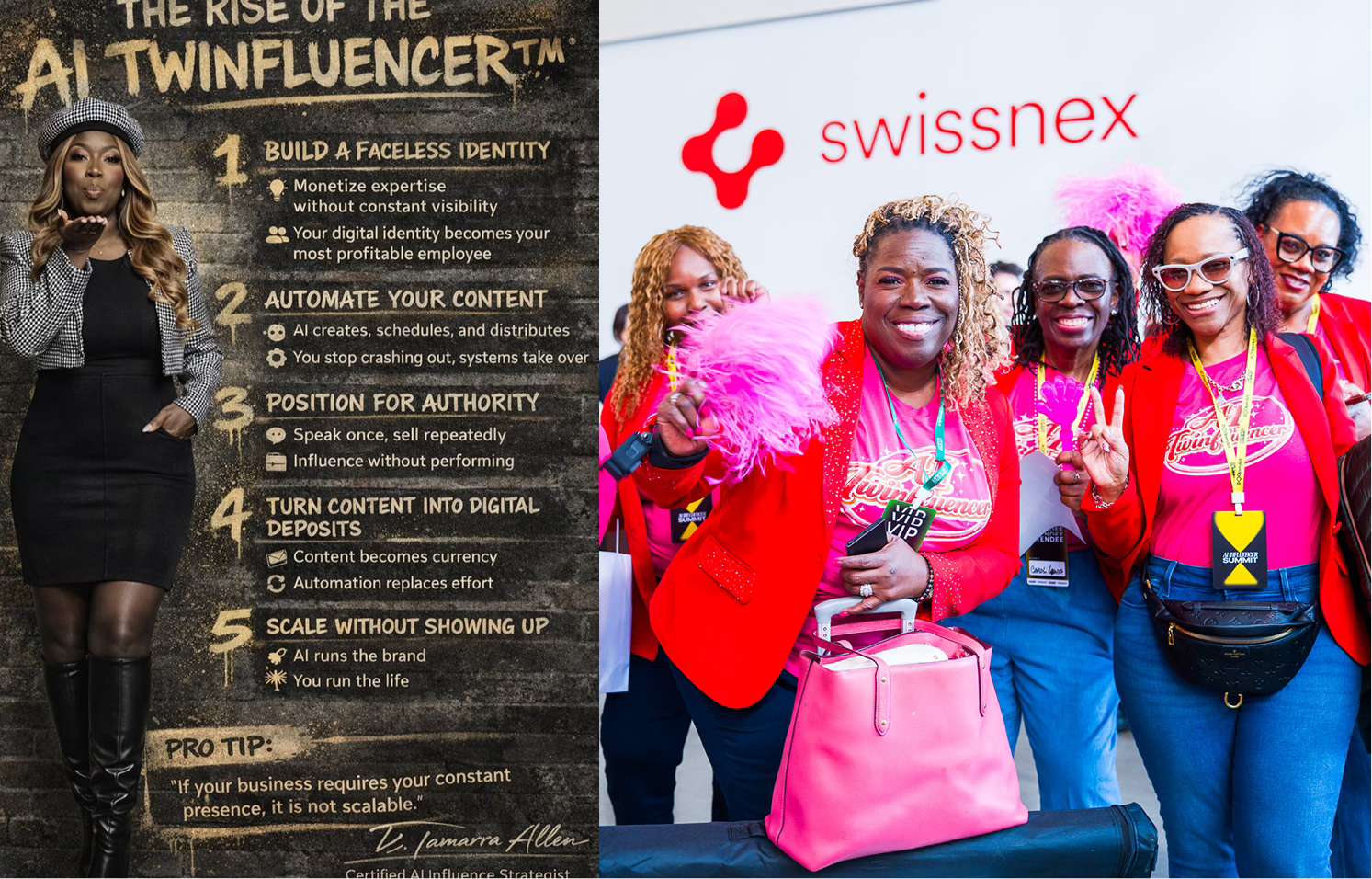
The event was also full of aspiring AI influencers, people striving to find large followings for their AI personas. I met one group of ladies in matching pink shirts who had flown in together from Atlanta. They were part of a group called the “AI Twinfluencers” and were all launching AI influencer alter egos of themselves.
The range of success between all these AI influencers varied widely. Just like normal influencers, there seems to be more supply than demand. It makes me wonder what exactly is different about the AI influencer economy.
So what exactly is new here?
What does it mean to regularly see influencers on screen that are not real? My first reaction is a mild anxiety. “AI characters appearing as real people? That sounds bad.”
But does it matter? How real are the ‘real people’ I see on screen? The attractive man telling me to buy deodorant is a paid actor. So is the attractive woman telling me to bank with her bank because it cares about people.
Social media is even grayer. These influencers offering me glimpses into their life are all too often puppets for monied interests. Their accounts are collections of managed images published on a schedule. Reaching out to influencers for my day job, I realize they all come with price sheets. Influencer X will say this for this much, that for that much. As one co-worker put it, “these people are coin-operated”. Now when I scroll past someone in my feed talking excitedly about a topic, I ask myself who exactly wants me to see this?
Flattening all influencers like this is, of course, cynical. If you accept this perspective, AI Influencers don’t seem all that different. They’re also a collection of images managed by someone trying to get your attention. In some ways, you might consider them more honest. They come with a ‘No real person here’ label.
So how different is an AI-generated character regurgitating someone else’s words from a real person doing it?
It’s a question that’s at least worth asking.
What’s the value of a good face?
We know influencers make a lot of money. The global influencer market is valued around $40 billion, and the entire creator economy over $250 billion. What about AI influencers? Do they actually make money?
I learned that quite a few do make money. Primarily through brand deals. Some of these are normal products like skincare or travel brands. Though upon closer inspection, a lot of the brand deals are from AI products that can be used to create AI influencers with the hope of making money through brand deals. There’s already an entire youtube cottage industry of people teaching you how to create AI influencers and make money. You might call it bubble economics, but it’ just as likely the early cycle of ecosystem.
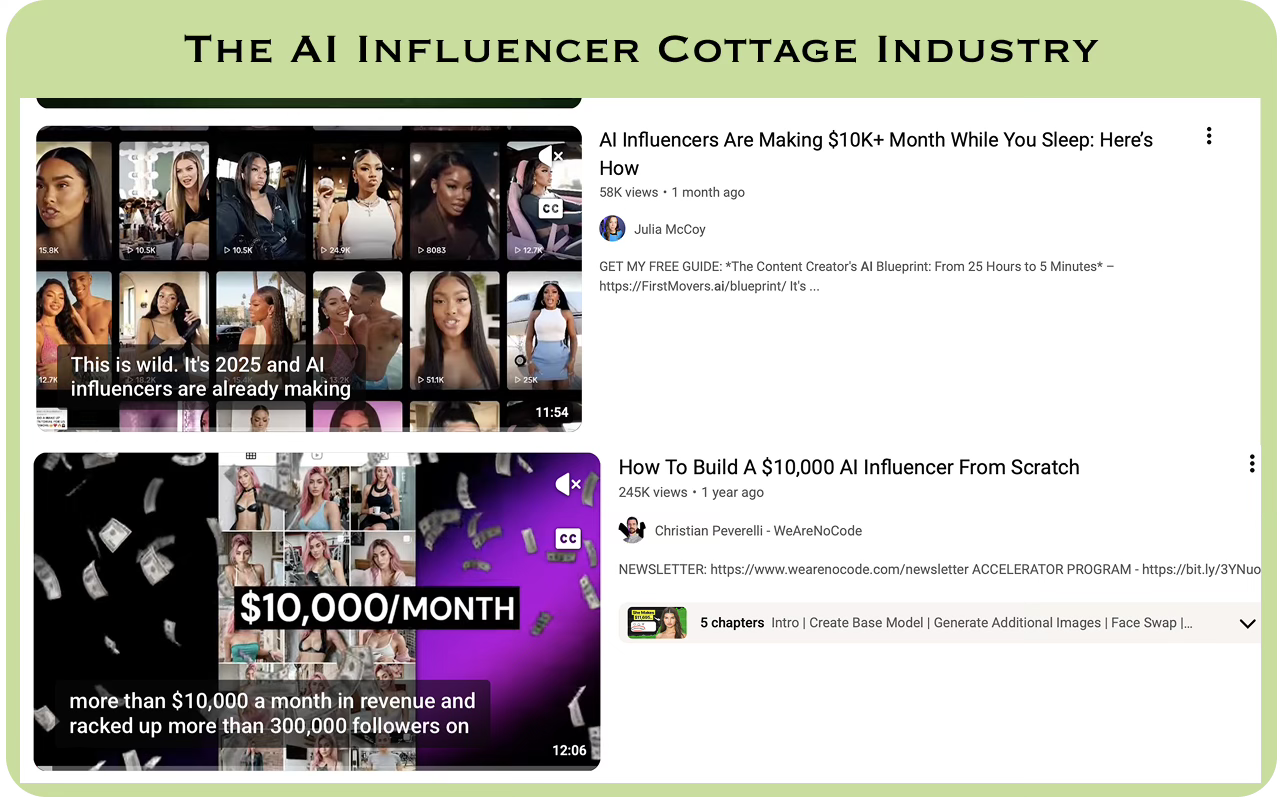
AI influencers are an interesting novelty that are clearly picking up steam. People follow them. People create them. Companies are sponsoring them. But the end result is still not there yet.
However, if you believe AI video outputs will become truly indistinguishable from real video outputs, which I do, then it follows there is no reason why AI influencers won’t become a norm.
You then need to ask another question. If launching totally realistic AI influencers is widely available to everyone in the world with a laptop, where does that put the value of an influencer? Do attractive faces become a complete commodity? A teenager in Serbia can spin up 100 new influencers tomorrow and launch them across every vertical.
It’s harder and harder to believe media will retain anything resembling its old value. The influencer space is no exception.
The map is no longer the territory
Passive scrollers of Instagram and Tiktok currently share an assumption that any image they see maps to real life. A photo of sandwich is a real sandwich from a real restaurant. You can go eat that sandwich if you find it. Influencers are valuable because they guide us through this phone-map of the world.
But now our phones show a world that doesn’t map to reality. This makes your phone less interesting in some ways, more interesting in others. I’m curious what it means for the value of images on our phones. Or faces on our phones?
You’ll often see posts that show AI video’s progress with a caption like “We’re so cooked” implying that totally compelling AI video will defeat human sensibility. This point-of-view lacks any imagination for how culture evolves.
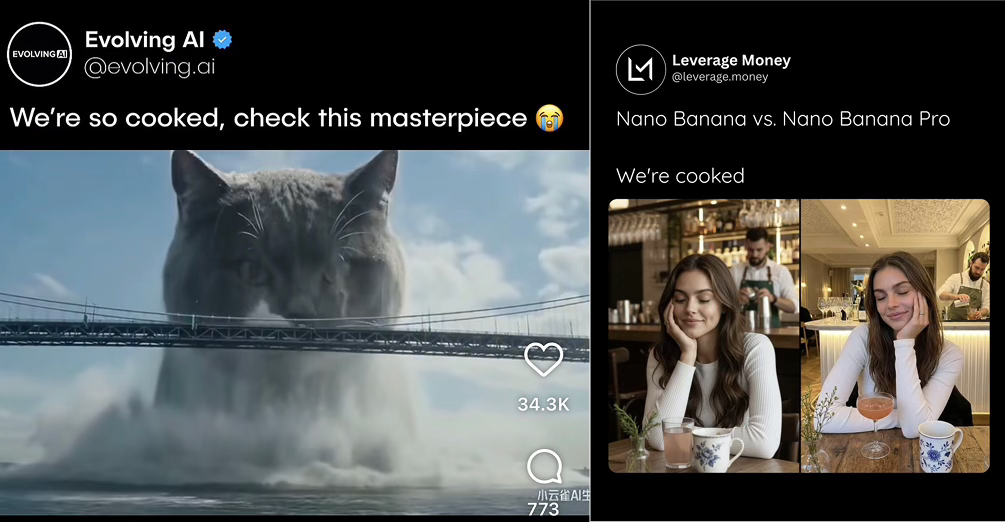
With the widespread onset of AI influencers, I don’t think people are likely to assume these are all ‘real people’ or ‘real things’. Maybe for a brief, chaotic period.
More likely, we will develop a new, shared understanding that what we see on our phones are manufactured images. Which, if you’re being honest, has always been the case. It will just be more obvious.
In a face, is proof of practice of the rhetoric being advanced by the face.
Now the proof may not be necessary if one has good etymological and critical reasoning and can evaluate ideas strictly abstractly, but if one is impressionable, bored, looking for entertainment, or at all lacking, he will be cooked if the faces aren’t true.
This isn't AI. It's entertainers using AI. If AI is finding it's way into every corner of entertainment, including influencers, that's not surprising. A little depressing, but not surprising